Description
Teak Serving Boards
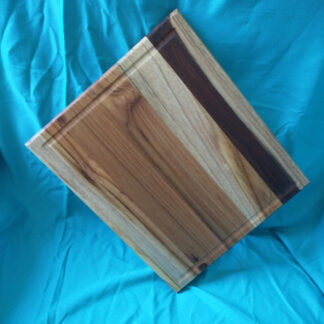
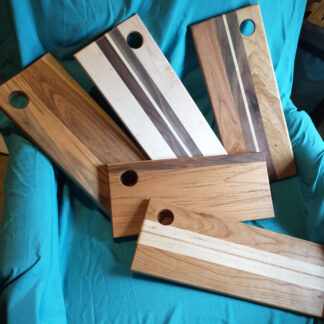
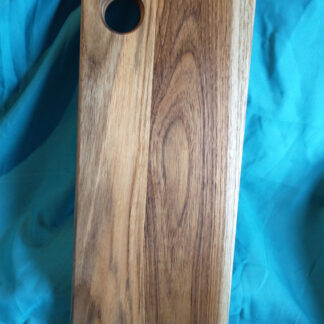
Charcuterie boards Teak wood. Made from beautiful Teak. Great addition for your kitchen or give as a housewarming, birthday, anniversary, retirement or reality closing gift.
Approximate size: 1″x 6″x 15″
$28.00
Charcuterie boards Teak wood. Made from beautiful Teak. Great addition for your kitchen or give as a housewarming, birthday, anniversary, retirement or reality closing gift.
Approximate size: 1″x 6″x 15″
4 in stock
Charcuterie boards Teak wood. Made from beautiful Teak. Great addition for your kitchen or give as a housewarming, birthday, anniversary, retirement or reality closing gift.
Approximate size: 1″x 6″x 15″
| Weight | 2 lbs |
|---|---|
| Dimensions | 1 × 6 × 16 in |
| Wood Combination | Cherry & Maple & Red Oak, Maple & Walnut, Cherry & Walnut & Maple |
Your review is awaiting approval
The choice between hosted and open-source models is rarely ideological.
Hosted models can reduce time to market and operational burden. Open-source models can offer more control over deployment, data handling, customization and unit economics at scale. The right decision depends on workload, risk, latency, volume and the engineering capacity available to operate the system.
We evaluate these trade-offs when building custom AI systems. Our wider engineering scope is described at https://ai-development-services.com, and the AI development services overview explains how model selection fits into the architecture. How are teams here making this decision for production applications?
Your review is awaiting approval
Production AI needs its own operational discipline.
We normally plan for versioned prompts and models, traceable inputs and outputs, evaluation datasets, latency and cost monitoring, fallback paths and rollback procedures. The exact stack varies, but these controls make experimentation compatible with reliable software delivery.
An overview of our work is available through AI Development Services. The complete delivery scope is described at https://ai-development-services.com, and our production AI engineering overview explains how these operational controls fit into implementation.
Which observability signal has helped you catch failures that standard application monitoring missed?
Your review is awaiting approval
For anyone selecting an AI development partner, I would look beyond the model names in the proposal.
The more useful questions concern data access, integration ownership, evaluation methodology, security, observability, deployment, intellectual property and support after launch. A team should be able to explain how the system behaves when retrieval fails, a model changes or an external API becomes unavailable.
We apply the same criteria when scoping projects at AI Development Services. Our wider delivery practice is outlined at https://ai-development-services.com, and the custom AI development overview provides more detail on the engineering process. What would you add to this checklist?